Workflow configuration
Intake → multi-model routing → side-by-side comparison → consensus/conflict review → human authorization → Decision Ledger commit.
A controlled workflow study of SmartSolo multi-model orchestration, human authorization, and Decision Ledger recording. This is not a customer case study and does not represent a production customer deployment.
SmartSolo was exercised in a controlled demonstration workflow to show how multiple model responses can be compared, how disagreement can be surfaced for human review, and how authorization and review actions can be preserved in a Decision Ledger record.
Model output was treated as assistance only. Consensus was not treated as factual truth. A human reviewer remained accountable for authorization.
Teams evaluating multi-model AI assistance often lose provenance when copying answers between tools, and they lack a durable record of who reviewed and authorized next steps.
This study configured a governed workflow to keep model responses, comparison, review actions, and authorization inside one operational path.
Environment: Controlled SmartSolo product demonstration workflow (not a customer production deployment).
Input: A governed command with prompt and supporting document intake suitable for multi-model review.
Models / providers: Multiple selected models available in the demonstration configuration. Exact provider inventory varies by deployment and is confirmed during evaluation.
Human roles: Reviewer responsible for comparison scrutiny; authorizing official responsible for approve / reject outcome.
Review thresholds: Contested or high-uncertainty outputs routed to explicit human review before authorization.
Intake → multi-model routing → side-by-side comparison → consensus/conflict review → human authorization → Decision Ledger commit.
Multiple model outputs were preserved for comparison rather than discarded after informal chat use.
Agreement and disagreement were surfaced as review aids. Consensus did not establish factual truth.
A reviewer inspected contested points before any authorization state was recorded.
Final approve/reject remained a named human decision, not an automated model action.
Review actions, provenance, and authorization history were retained as an operational decision record.
What SmartSolo did not decide: SmartSolo did not autonomously approve consequential action. Authorization remained with the human reviewer.
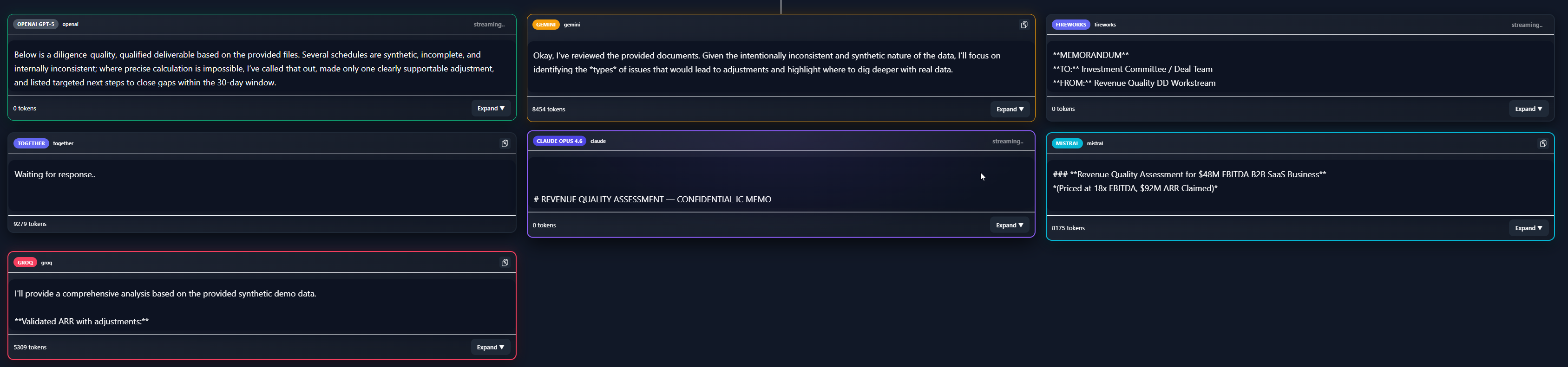
Request and document intake that starts the governed command.
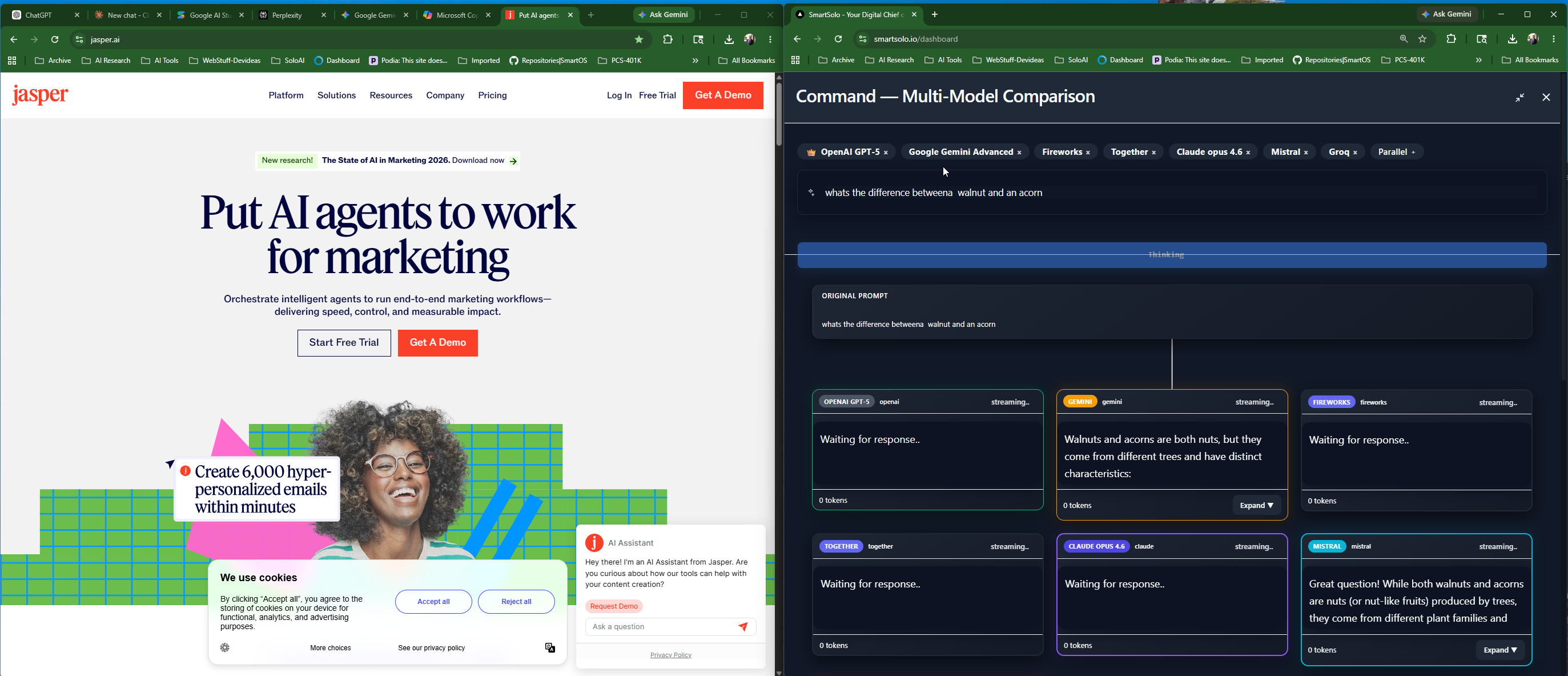
Side-by-side model responses used for reviewer scrutiny.
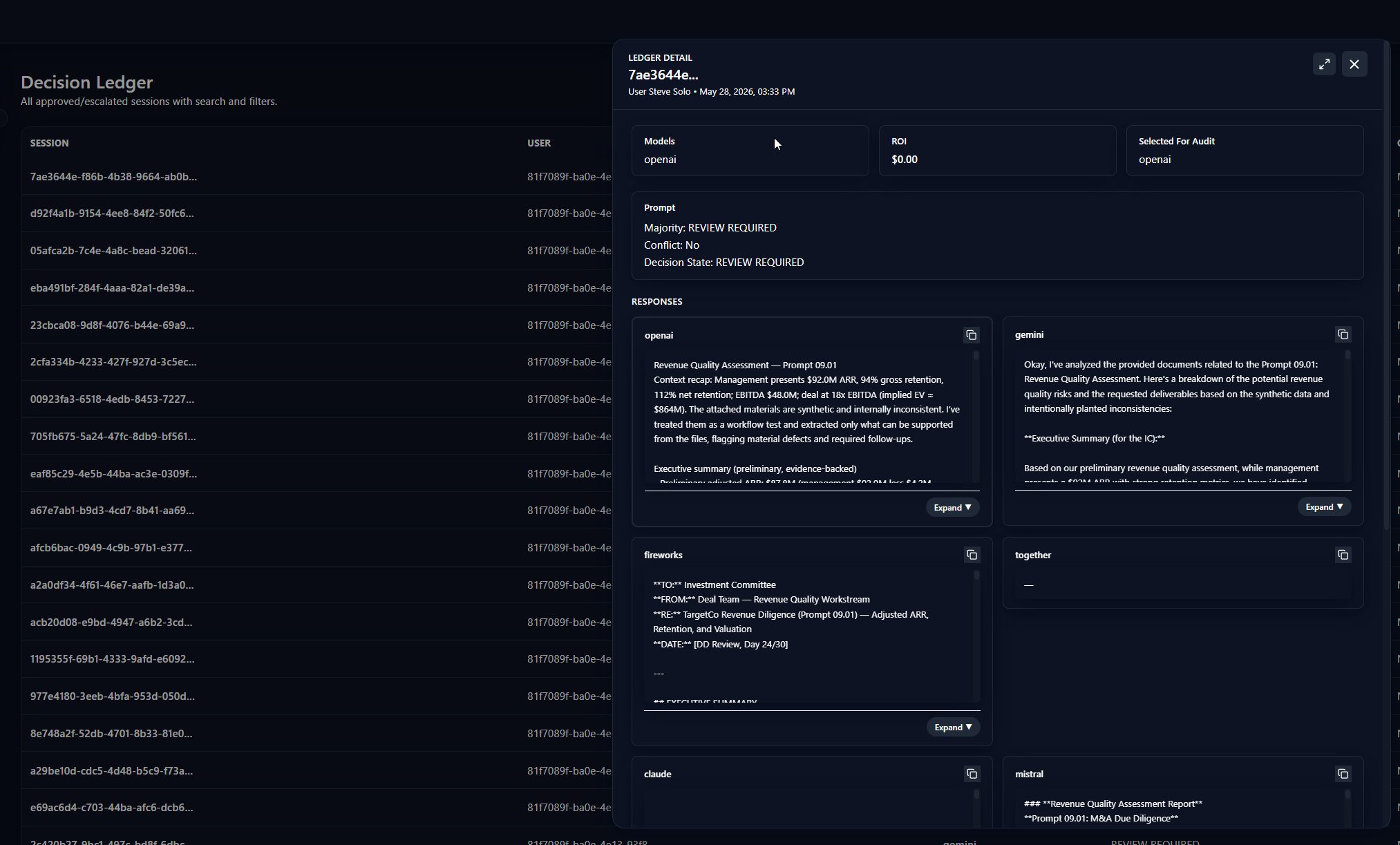
Review actions and authorization history preserved as an operational record.
Evidence sources were limited to existing public product screenshots and documented SmartSolo workflow capabilities already present on the corporate site. No customer names, private prompts, private model outputs, or confidential architecture details were published. Sensitive fields in screenshots remain redacted or non-sensitive demonstration content.
This study demonstrates a controlled workflow. The resources below explain the underlying control design.
Review how SmartSolo coordinates multiple AI models, routes human authorization, and preserves the decision record.