Model routing and provenance
Route work across selected models and retain which provider and model produced each response.
Smart Logic AI establishes the corporate governance umbrella — how AI-assisted decisions are reviewed, authorized, recorded, and evidenced. SmartSolo operationalizes multi-model decision intelligence within that architecture.
Model inventory, risk registers, and policy libraries answer what AI exists in the organization. They do not, by themselves, govern how a specific AI-assisted output becomes an authorized decision. See model governance vs. decision governance for that distinction.
When teams use multiple providers, the gap appears at execution: who reviewed the output, who authorized it, what evidence was preserved, and how audit trails are produced.
Smart Logic AI focuses on decision governance — review gates, authorization states, provenance, and audit evidence when model output can influence operational action. An AI governance framework sets expectations; this architecture is about applying them in workflow. Evidence-first study designs are collected under AI governance research.
SmartSolo operationalizes this architecture for multi-model workflows. Pair it with human authorization workflows and the federal implementation sequence when accountability requirements are high. This is governance support — not a substitute for your organization's compliance program or regulatory obligations.
Route work across selected models and retain which provider and model produced each response.
Surface agreement, disagreement, confidence, and uncertainty signals to help reviewers prioritize scrutiny.
Route consequential outputs through structured review before authorization, rather than relying on informal chat history.
Capture named approval, rejection, and escalation states so authority remains with accountable people.
Preserve prompts, outputs, reviews, and decision history as an operational record for later audit and investigation support.
Provide traceable evidence that can support organizational compliance programs — without claiming automatic certification.
SmartSolo assists analysis, comparison, review, authorization, and execution preparation. It does not replace accountable decision-makers or convert every AI output into an operational action.
Deployment still depends on organizational policy, reviewer competence, access control, and the security posture of the environment.
No. SmartSolo provides controls and records that can support governance and compliance programs. Formal compliance depends on your policies, assessments, and organizational execution.
No. The focus is operational workflow control — review gates, authorization states, and decision records tied to multi-model work.
Named human reviewers and authorizing officials remain accountable. SmartSolo is designed to document that authority, not replace it.
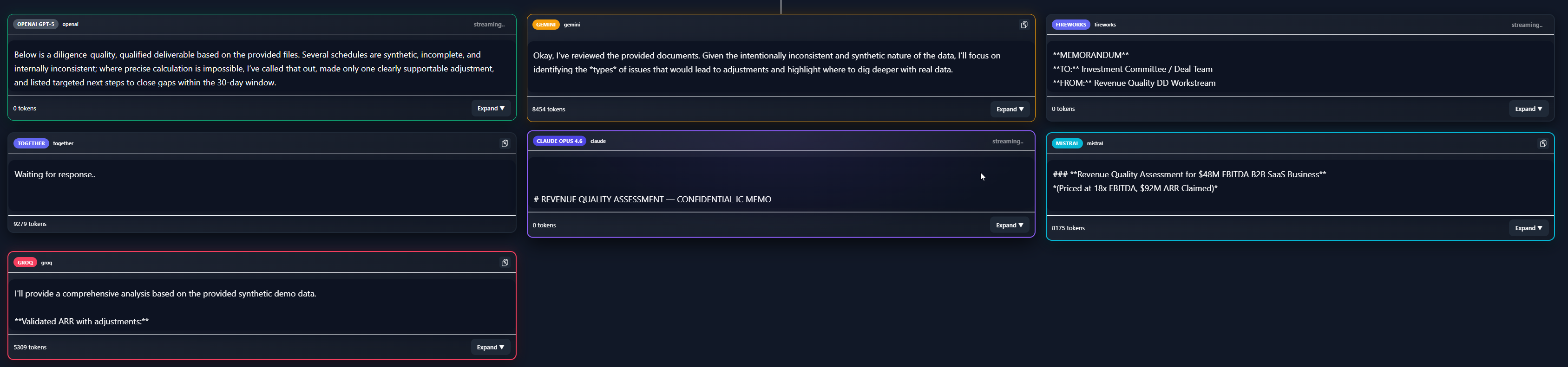
What you are seeing: SmartSolo prompt and document intake that starts a governed multi-model command. Why it matters: governance starts at request intake, before model outputs can become operational action.
Authoritative sources cited for nearby factual claims. Links open official publisher pages.
Review how SmartSolo coordinates multiple AI models, routes human authorization, and preserves the decision record.