Prompt and document intake
Capture the inputs that initiated the workflow.
Ordinary chat history is not a decision record. SmartSolo™ preserves the artifacts needed to reconstruct how an AI-assisted decision was prepared and authorized.
Chat transcripts rarely capture model identity, review actions, authorization states, or later changes with the rigor operational audits expect.
A Decision Ledger is intended to preserve the chain from intake through review and authorization for AI-assisted operational workflows.
Capture the inputs that initiated the workflow.
Retain provenance for each response included in review.
Keep outputs available for comparison and later investigation support.
Store review aids that influenced scrutiny, without treating them as proof of correctness.
Record review actions, comments, and routing.
Preserve approvals, rejections, escalations, and related changes.
The Decision Ledger records prompts, model and provider identity, responses, reviewer activity, modifications, timestamps, and authorization history across configured workflows.
Retention and deployment controls are configured according to organizational policy and technical requirements.
No. It provides decision-oriented records for AI-assisted workflows that can support audits and investigations. Broader compliance programs remain organizational responsibilities.
No. Traceability supports accountability and review. It does not guarantee accuracy or outcome quality.
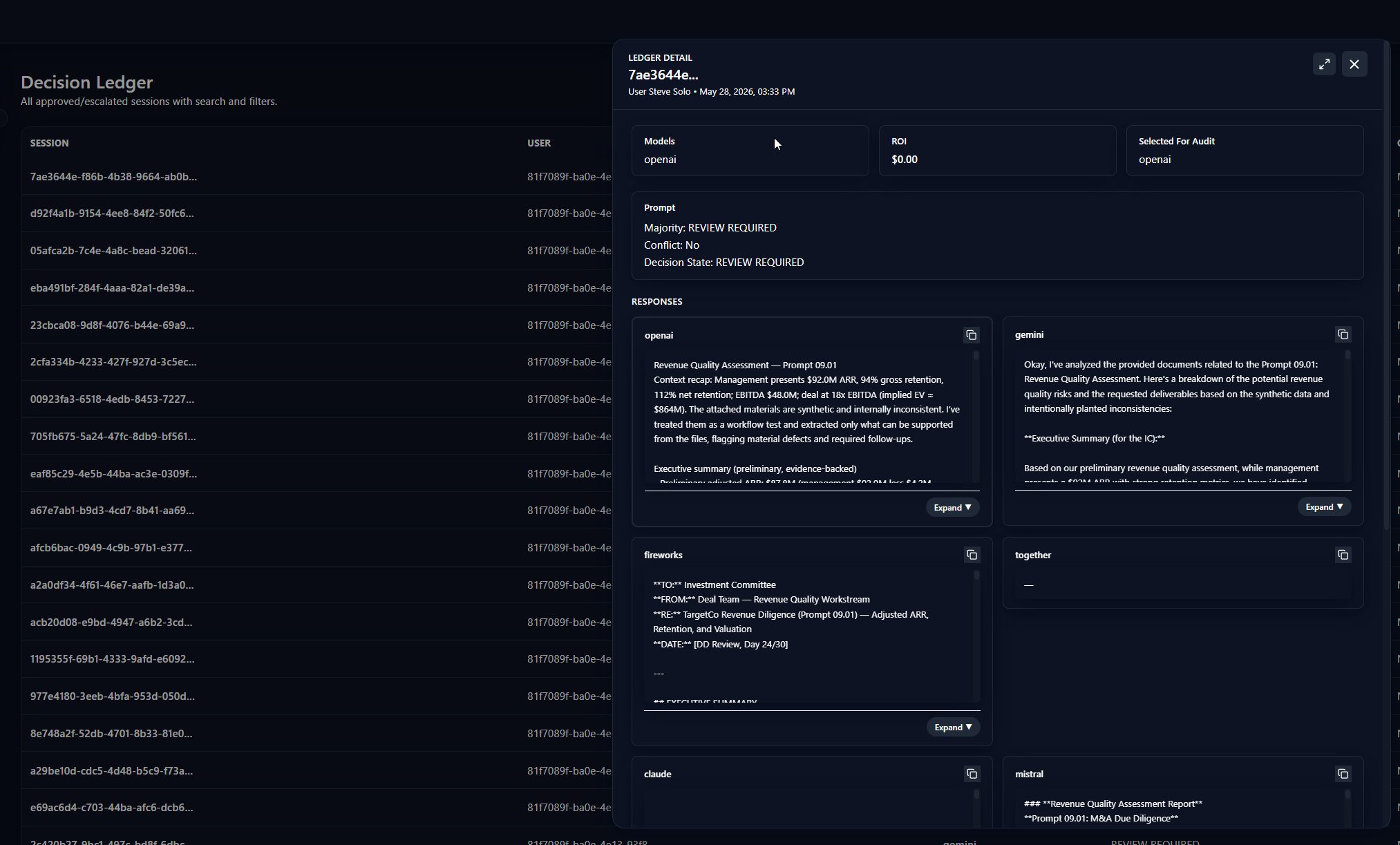
What you are seeing: SmartSolo Decision Ledger with review actions and authorization history. Why it matters: chat history is replaced by an operational decision record reviewers can reconstruct later.
Review how SmartSolo coordinates multiple AI models, routes human authorization, and preserves the decision record.