Review roles
Assign who can review, escalate, approve, or reject within a workflow.
Structure review roles, escalation, thresholds, and named authorization so AI assistance does not silently become unsupervised action.
Human-in-the-loop is more than showing an Approve button after a chat response. Use the HITL governance checklist and an AI decision authority matrix to name roles before go-live. The human override study design explains how review and override rates would be measured from Decision Ledger events.
Operationally, it means defined review roles, escalation paths, decision thresholds, recorded approvals or rejections, and a history of overrides. Retain those outcomes in a Decision Ledger field set.
Assign who can review, escalate, approve, or reject within a workflow.
Move contested or high-impact cases to the appropriate authority.
Apply stronger review when risk, disagreement, or uncertainty increases.
Capture explicit outcomes instead of relying on memory or chat scrollback.
Retain how recommendations changed before final authorization.
Preserve who authorized an action-ready decision package.
Controls do not substitute for reviewer competence, adequate evidence, or organizational policy. High-accountability programs should also follow a practical federal AI governance implementation sequence when agency or contractor requirements apply.
Inappropriate use includes treating model consensus as automatic approval or using AI outputs as final authority in consequential settings without documented human review. For a product-oriented walkthrough of review gates, see the SmartSolo product demo.
No. SmartSolo supports analysis and structured review while accountable people retain final authority over consequential decisions.
Not by itself. Effective human-in-the-loop practice needs roles, thresholds, escalation, and durable records of what was authorized.
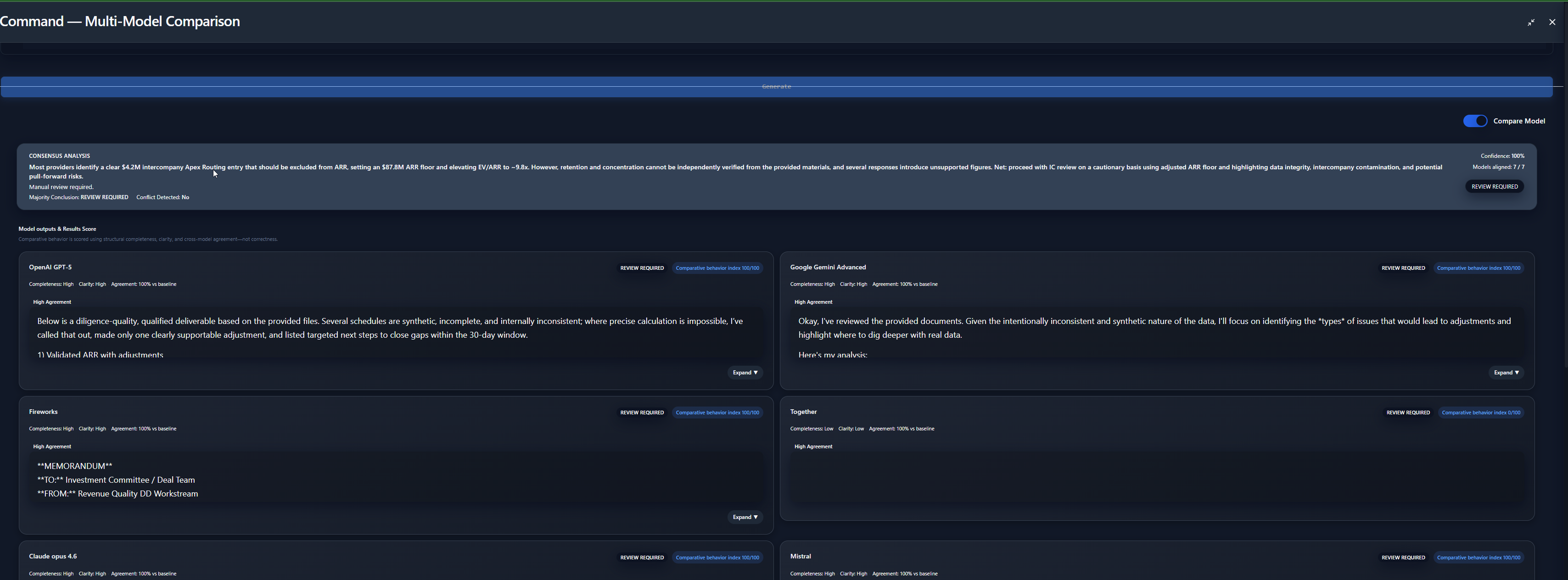
What you are seeing: SmartSolo consensus analysis highlighting agreement and conflict across models. Why it matters: disagreement is surfaced for human review rather than treated as automatic truth.
Authoritative sources cited for nearby factual claims. Links open official publisher pages.
Review how SmartSolo coordinates multiple AI models, routes human authorization, and preserves the decision record.